
The Multifaceted Pentameter: Unorthodox Variations
Let's get jazzy.

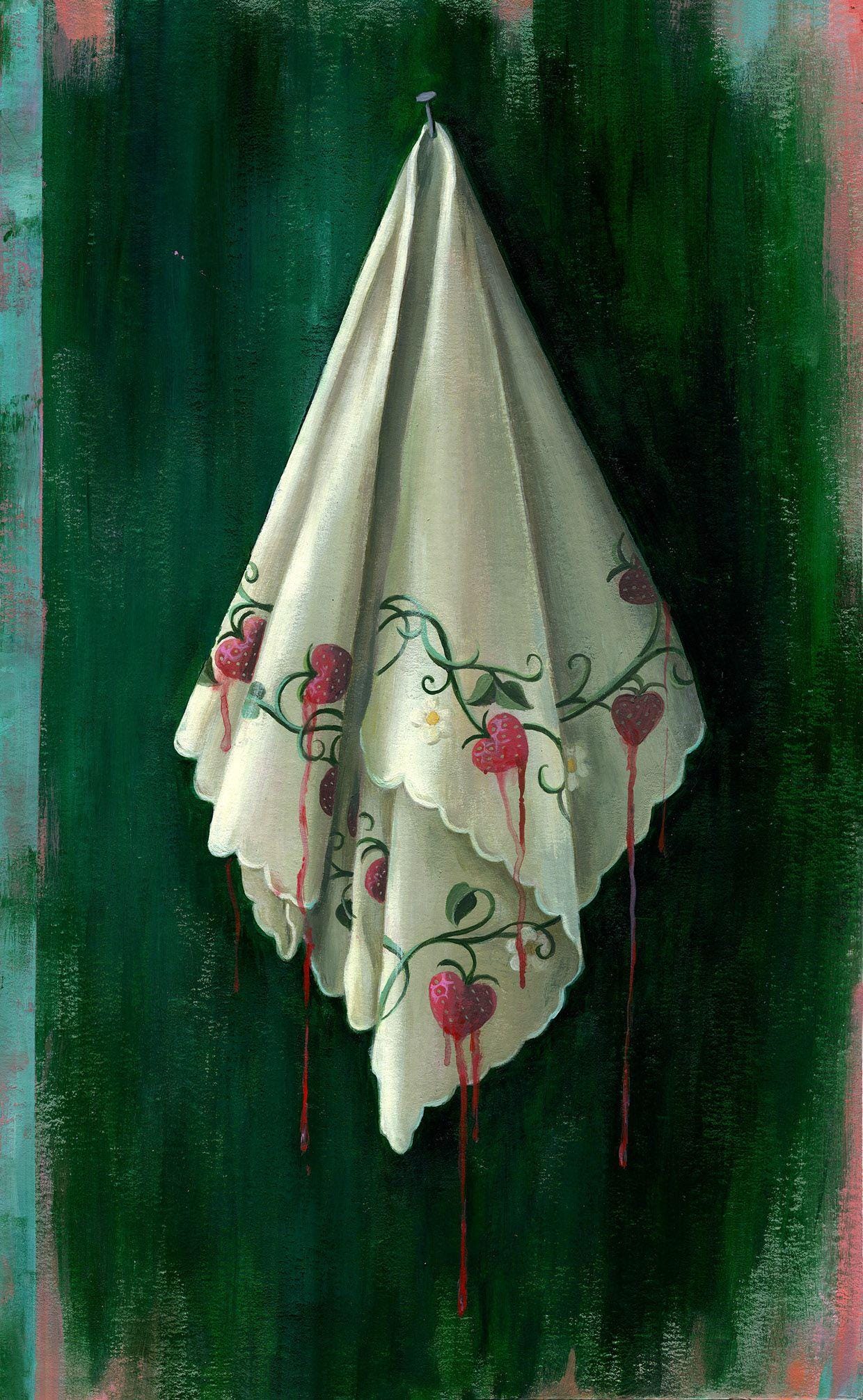
At the end of my last post, I left you with this line:
Is’t lost? Is’t gone? Speak, is’t out o’th’ way?
Something else is lost and gone besides Desdemona’s handkerchief and Othello’s sanity.
We have the full five beats. But…where’s the offbeat between the 2nd & 3rd beats?
Omitted Offbeats
The jolt
Omitting a syllable within the line is a technique specific to Shakespeare’s dramatic work, which he employed very sparingly, and only for specific dramatic effect. In this instance, the syllable pause, followed by the abrupt demand, “Speak”, when Desdemona doesn’t immediately respond, conveys Othello’s extreme agitation.
Is’t lost? Is’t gone? _ Speak, is’t out o’th’ way?
I call this particular variation - the omission of an offbeat after a caesura - a jolt (though this line type, with only one “jolt”, has also been called the broken-backed line).
The above example has a sharp emphatic rising rhythm, while the jolt enables the one emphatic monosyllabic demand, “Speak”, to stand bold in the middle.
However, this variation also provides the opportunity for an expressive opening fall after the caesura, introducing a contrasting swifter rhythm.1
Northumberland, unthinkingly committing the unfortunate faux pas of referring to King Richard simply as “Richard”, is rounded on by the king’s brother, the Duke of York. Pulled up short, and having to think on his feet, Northumberland replies thus:-
Your grace mistakes; _ on{ly to be brief}
Left I his title out.
From Timon of Athens (the meaning of the words after the jolt can be paraphrased as “nothing you steal will not come from a thief's pocket”):
                                                   …{Cut throats},
{All that you meet} are thieves: to Athens go,
{Break o}pen shops, _ nothing can you steal
But thieves do lose it.
The initial jolt
A line which omits the opening offbeat is known as a headless line, and often takes the form of an initial jolt.
Here are just a few, of many, expressive effects Shakespeare achieves through this abrupt opening:
Absolute devastation
Lear, insane with grief at the loss of his daughter, berates the fact that the most lowly animals still have life, but she will “come no more”:
_ Never, never, never, never, never.
Ends on a tail (an extra offbeat at the end of the line), accommodating five falling words.
Impatience -
A tired Richard III growls at the servant who brings him wine on the night before his fateful battle:
_ Set it down. Is ink and paper ready?
This line is also tailed, and has an identical stress pattern to Lear’s line - but with more varied shape to the words and phrasal units.
Frustration
_ Where the devil should this Romeo be?
(Romeo can be pronounced with either the full expansion of three syllables, “Ro-mi-oh”, or metrically contracted to two. In this example it’s two: “Rome-yo”.)
An imperious command:
In Richard II, just as Bolingbroke and Mowbray are about to begin their duel to the death, the Lord Marshal interrupts with…
_ Stay, the King has thrown his warder down
Within a far more intimate context, this short poem, by John Donne, has two headless lines, both of which begin with an imploration for his beloved to “Stay”:
_ STAY, {O sweet,} {and do not rise!}
The light that shines comes from thine eyes;
{The day breaks not:} it is my heart,
Because that you and I must part.
_ Stay! or else my joys will die
And pe{rish in their in}fancy.
The headless line as a lineated lyric caesura
The missing head (the opening offbeat) is rhythmically replaced when the previous line ends on a tail.
These lines from A winter’s Tale are addressed to Leontes by Hermione:
                                             …You look
As if you held a brow of much distraction: →
Are you moved, my lord?
If we remove the lineation, we see there is, rhythmically, no missing syllable, as the tail stands in for the head:
You look / As if you held a brow of much distraction: / Are you moved, my lord?
In effect, the lineation provides a lyric caesura (a phrasal break after a standard offbeat), and the immediacy of her question on the back of her observation conveys the urgency of her concern.
Later on we’ll look at examples where the tailed line is enjambed2 (meaning the phrase runs over the end of the line, as opposed to coinciding with the line ending, which is then described as “end-stopped”).
Here’s Glendower boasting of the fruitlessness of King Henry’s invasions:
                                …{thrice from the banks} of Wye
And sandy-bottom'd Severn have I sent him →
Bootless home and weather-beaten back.
This might seem like an enjambment, but it’s perhaps better described as a lineated (albeit light) lyric caesura, as “bootless” is an interjection: “…I sent him, profitless, home…”.
Consecutive jolts
In these examples, we have a string of two or more emphatic beats, with the intervening offbeats omitted:
{Blow winds}, and crack your cheeks; _ rage, _ blow
{Nay, send} in time. _ Run, _ run, {O run}!
Is goads, _ thorns, _ nettles, tails of wasps
You can even skip all five offbeats!
_ Kill, _ kill, _ kill, _ kill, _ kill him
(the last syllable is a tail!)
And this line from Cymbeline is delivered by the villain, Iachimo. At the end of the scene where he has successfully tricked his way, unseen, into the bedchamber of the heroine, Imogen, he stands and listens to the chiming of the clock:
_ One, | _ two, | _ three, | _ time, | _ time.
For the first three feet, the chimes of the clock stand in for the missing offbeats! On the next pause he finds the chimes have stopped, so he knows it’s 3am. “time…time”.
The drag
Here, an offbeat is omitted from within a phrase, rather than at a caesura. In contrast to the abruptness of the jolt,3 this creates a lingering, drawn out effect:
                         …{But why} commands the King
{That his chief foll}owers lodge in towns about him
While he himself {keeps in the cold} _ field?
(“followers” is metrically contracted: “foll’wers”).
He falls to such peru{sal of my face}
As he would draw it. Long _ stayed he so.
Internal missing foot
Here we find a whole iamb has gone AWOL!
{Must give} us pause. _ _ {There’s the respect}
The Missing Beat
A missing beat is an acting cue. For instance…
My father, _ methinks I see my father
What does Hamlet do on the silent beat? Perhaps draws in his breath, and raises a hand in a longing gesture? Regardless, the silent beat is a cue for the actor to do something.
There is, intriguingly, a matching line from Ophelia later on:-
And with a look {so piteous in purport},
As if he had been loosed out of hell
To speak of horrors: _ he comes before me.
(“piteous” is contracted to count as two syllables, and the “-ed” suffix in “loosed” is pronounced separately)
At this point Ophelia is relating to her father how Hamlet came bursting into her chamber – however, she uses the present tense “comes”, instead of the past tense “came”. In recalling him so vividly, he evidently appears to be very much present to her – in her “mind’s eye” (just as Hamlet’s father was to the young prince). At the missing beat there may be a similar drawing in of breath, and she might pull herself in as she braces herself.
That’s how I picture it: an outward, gesturing, longing motion from Hamlet; a self-protective, fearful, drawing-in motion from Ophelia. What do you think?
You can even have a silent beat at the end of a line!
{Look how he makes} to Caesar. Mark him. _ (grabs his co-conspirator’s arm, and points!)
And in this example, in which Cleopatra’s messenger brings her very unwelcome news, “patience” is elongated to three syllables: pay-she-ence.
{Good ma}dam, patience. || {What say} you? _ (strikes him!)
{Hence, ho}rrible villain, or I’ll spurn thine eyes
Like balls before me!
(In the urgency of her rage, “horrible” is pronounced swiftly, metrically contracting to two syllables)
They can also occur at the juncture of a shared line. Shortly after the quote from Othello with which I began this post, the exchange between he and Desdemona, who is determined to persuade her husband to reinstate Cassio, the very man Othello suspects her of having slept with, continues thus (all words other than “The handkerchief!” are Desdemona’s!):
{You’ll ne}ver meet a more sufficient man.
The handkerchief! || I pray, {talk me} of Cassio.
The handkerchief! || A man that all his time
Hath foun{ded his good for}tunes on your love,
{Shared dan}gers with you || _ (stamps in frustration!) The handkerchief!
The Epic Caesura
Serious students of Shakespeare - especially actors, directors, and acting coaches - really ought to familiarise themselves with this variation: it is by far the most common unorthodox variation in his plays.4 The epic caesura is a mid-line tail.
A tail (aka “feminine ending”) is an extra offbeat overrunning the end of the line:
To be or not to be, {that is the ques}tion
You can see the extra offbeat, on the last syllable of “…question” (at the end of a swing).
The epic caesura is a tail within the line, marking a caesura (a phrasal break within the line):
And by opposing, end them. To die, to sleep,
Can you see the mid-line tail before the full stop?
I mark it here with a closed parenthesis mark:
And by opposing, end them.) To die, to sleep,
It creates a break in the rhythm…followed by a resumption:
di-dum-di-dum-di-dum-di…di-dum-di-dum5
Here, in Macbeth, it lands at the mid-line colon (at the end of an opening stomp & slide):
Wake Duncan with thy knocking: I would thou could’st.
{Wake Duncan with thy kno}cking:) I would thou could’st.
In both these examples, the break…and resumption created by the epic caesura serves to highlight a contrast between the two halves of the line.
In Hamlet’s line, the searching tone instigated by his “question” is replaced by the assertive tone of “To die, to sleep,” (by which he means “to die is to sleep”).
In Macbeth’s, the first half is a command…and the second half a despairing acknowledgement of the impossibility of what he is asking.
An epic caesura can also combine with an end-line tail in the same line - as when Enobarbus, lost in reverie, lingers over every detail as he recounts his (and Mark Antony’s) first encounter with Cleopatra (the enjambment on “that” also contributes to the sense of awed reflection):
{Purple the sails}: and so perfumed that
The winds were lovesick with them.) The oars were silver,
{Which to the tune} of flutes {kept stroke}, …
(“perfumed” is trisyllabic: the “-ed” suffix is pronounced separately)
Here’s a beautiful employment of an epic caesura by John Keats, towards the end of On First Looking into Chapman’s Homer:
{Or like stout Cor}tez when with eagle eyes
He star’d {at the Paci}fic)—and all his men
{Look’d at each o}{ther with a wild} surmise—
{Silent, upon} a peak in Darien.
The interruption to the rhythm provided by the final falling syllable of “Pacific” simulates the stunned wonder of Cortez’s men at the very sight, before they look at each other wordlessly “with a wild surmise” (the split swing, opening the final line, adds to the awestruck tone).
Shakespeare would never have employed this variation in his formal verse. Keats is nudging the envelope.
Headless with epic caesura
The headless line with an epic caesura! In a way, this line pattern is the inverse of the broken-backed line (a single jolt in the middle): the first half most readily accommodates a falling rhythm, and the second half opens on a rise:-
_ Marriage Uncle?) Alas my years are young
_ O my follies!) Then Ed{gar was abused}
Here Juliet responds to Friar Laurence as he offers the vial containing the potion that will cause her to appear dead, if no “womanish fear” prevents her from taking it:
_ Give me, give me,) {O tell} not me of fear
Snakecharmer by Sylvia Plath
Some modern poets have employed these same variations liberally.
This wonderfully sinuous poem contains headless lines, drags, epic caesuras - and even a missing beat!
The first lines of the first and last stanzas open on an anapest: a loose iamb (di-di-dum: “As the gods…”, “To a mel…”).
Most people would probably not, as I have done, mark an epic caesura after the word “snakecharmer” in line 2; they would instead mark “…mer begins” as an anapest. But rhythmically that lands for me as a light epic caesura (complementing the identically placed epic caesura in the following line).
“flickering”, in line 9, I read as metrically contracted: “flick’ring”.
I have marked a few lyric caesuras (a standard caesura after an offbeat) where the following beat lands strong, using a broken pipe symbol: ¦
As to be expected with a poem of any length, there are lines which could be scanned a little differently.
As the gods {began one world}, and man another,
{So the snakechar}mer) begins a snaky sphere
With moon-eye, ¦ mouth-pipe.) He pipes. {Pipes green}. {Pipes wa}ter.{Pipes wa}ter green {until green wa}ters waver
With reedy lengths and necks and undulatings.
And as his notes {twine green}, the green _ river →Shapes its i{mages around} his songs.
He pipes a place to stand {on, but no rocks},
{No floor}: a wave of flickering grass _ tonguesSupports his foot. He pipes a world of snakes,
Of sways and coilings,) {from the snake-roo}ted bottom →
Of his mind. And now {nothing but snakes}Is vi{sible}. The snake-scales have become
{Leaf, become eye}lid; ¦ snake-{bodies,} {bough, breast}
Of tree and human.) And he within this snakedom →Rules the wri{things which make ma}nifest
His snake{hood and his might} with pliant tunes
{From his thin pipe}. {Out of this green} _ nestAs out of Eden’s navel ¦ twist the lines
Of snaky generations:) {let there be snakes}!
And snakes {there were, are, will} be—till yawnsConsume this pi{per and he tires} of music
And pipes the world {back to the sim}ple fabric
Of snake-warp, ¦ snake-weft. ¦ Pipes the cloth of snakesTo a mel{ting of green wa}{ters, till no snake}
_ Shows its head, {and those green wa}ters back to
{Water, to green}, to nothing like a snake.
Puts up his pipe, and lids his moony eye.
You can see all three drags come at the end of a stanza:
…green _ river
…grass _ tongues
…green} _ nest
The headless line following an enjambed tail
There are four headless lines, and in the first three, a tail at the end of the previous line fills in for the head. The first two are clearly enjambed.
The first across a stanza break, separating noun phrase from verb:
…the green _ river →Shapes its i{mages around} his songs.
the green _ river / Shapes its i{mages around} his songs.
And an ultra-smooth enjambment here, dividing a noun phrase:
                            …{from the snake-roo}ted bottom →
Of his mind.
…{from the snake-roo}ted bottom / Of his mind.
This latter is itself a phrasal pentameter, snaking over the line. And it forms part of a string of phrasal pentameters.
Here’s the original lineation:
                            …He pipes a world of snakes,
Of sways and coilings,) {from the snake-roo}ted bottom →
Of his mind. And now {nothing but snakes}
Is vi{sible}. The snake-scales have become
{Leaf, become eye}lid; ¦ snake-{bodies,} {bough, breast}
Of tree and human.)
And here’s the same passage arranged according to the phrasing:
…He pipes a world of snakes, / Of sways and coilings,)
{from the snake-roo}ted bottom / Of his mind.
And now {nothing but snakes} / Is visible.
The snake-scales have become / {Leaf, become eye}lid; →
snake-{bodies,} {bough, breast} / Of tree and human.)
Five successive phrasal pentameters slithering across the lines.
The epic caesuras in this phrasal relineation become end-line tails.
The original lineation enables a pregnant pause between: “…become / Leaf…”, the latter forming the opening beat of a swing.
In the third instance of a tail preceding a headless line, a prepositional phrase provides a light end-stop:
…And he within this snakedom →Rules the wri{things which make ma}nifest
And he within this snakedom / Rules the wri{things which make ma}nifest
Though she chooses not to, one could place commas around the intervening prepositional phrase:
And he, within this snakedom, / Rules the wri{things which make ma}nifest
In providing a lineated lyric caesura, across a stanza break, she invests “Rules” with a suitably emphatic authority whilst maintaining fluidity.
The headless line as a lineated drag
Here, there is no tail to replace the head:
To a mel{ting of green wa}{ters, till no snake}
_ Shows its head,
However, the line (closing on a pump) is enjambed, the lineation separating the noun phrase from the verb phrase. This is, in effect, a drag:
…till no snake _ Shows its head,
The earlier drags separated adjective and noun, so there is a slight phrasal juncture here by comparison; but the lingering, drawn out effect is heightened by the phonology of “Shows”, with its unvoiced “sh” and long diphthong - complemented in turn by “no” and “those” on either side:
                                             …till no snake
Shows its head, and those green waters...
Also elegantly effective is the follow-on enjambment at the end of the line:
                                                                         …back to
Water, to green,
While our eye literally moves “back to” the beginning of the next line, the lineation, in combination with the split swing, turns the first four syllables into two falling steps, to be met by a single rising step (to the same “green” with which he “Pipes” in line 3 of the opening stanza, bringing us full circle).
And finally, did you spot the yawning silent beat? I didn’t mark it. It’s already marked by a dash!
And snakes {there were, are, will} be—till yawns
So a wonderfully expressive range of unorthodox variations; but the staccato of the jolt has no place in Sylvia’s serpentine offering.
In Part 3 we’ll be exploring the sonnet form with a carefully crafted example from J.C. Scharl, including some deftly patterned interweaving of jolts in combination with lyric caesuras (and this will be a deep dive, with meter as just one integrated dimension).
And finally…
A quick shout out to Brooklyn Crane, who has not only promoted my posts, but does a wonderful job of promoting other poets on this platform - on his own Substack, Scheming Rhymes, and, with Dorie Snow/雪多丽 and other contributors, on the White Rabbit Poetry Society.
Also, and especially for home-educators, I’d like to recommend Gemma Lynn Myers’ Substack, A Poetic Home, where twice a month she provides a delightfully engaging and thorough rundown of a poem, with suggestions and resources for engaging your children’s enthusiasm!
With rising words and phrases, the stressed syllables are also concluding syllables; in contrast, the initial stresses of falling words and phrases tend to be more swiftly followed by the subsequent unstressed syllable or syllables.
To “enjamb” derives from the French enjamber: to straddle.
Jolt and drag are terms I’ve borrowed from Rhythm and Meaning in Shakespeare by Peter Groves.
Taking all his plays together, around 1 in 38 lines of blank verse (unrhymed iambic pentameter) contain an epic caesura, and around 1 in 21 from Twelfth Night onwards.
Epic caesuras are a special type of feminine caesura: a caesura after an offbeat - in this instance, the offbeat provided by a mid-line tail. The far more common feminine caesura is the lyric caesura: a caesura after a standard offbeat.
Thanks for this Keir. This question of pauses is a hard one. You've treated it here as as downstream of a perfectly metrical line--the pauses simply are where a missing beat might go. That pays off surprisingly well, especially with the Shakespeare. But it leads you to a few dubious readings, like putting a pause between two strong beats when clearly those strong beats are meant to go together (long stayed), and draw their strength from being uneasily adjacent. Also I'm not sure a headless beat really should be considered starting with a pause. That said, just the treatment of pauses is excellent and--for me--sorely needed. Ima go and try out all the permutations--strong pause strong, weak pause strong, weak pause weak, etc.
This is great stuff. Thanks for taking the time to do this. Certainly, nothing you've written jumps out to me as wrong, but while I know my way around meter and historical language more than the average man in the street, I'm not an expert. And since I'm not an expert, I can only evaluate detailed analyses so well.
All that to explain why I'm asking the following question: do you have some kind of background in this stuff? "Background" referring to professional, academic, or traditional training.